The Science of Seasonal Movement
A Living “Did You Know?” Collection from Warrior Sanctuary
Your body is basically a remix of biology, rhythm, and ancient wisdom—and every season hits a different frequency. When you move with nature instead of in spite of it, you regulate your nervous system, balance hormones, and build a year that actually supports your energy instead of drains it.
This is where science meets soul. This is Warrior Sanctuary
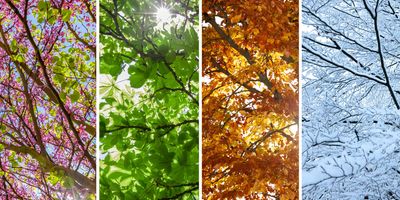

❄️ Winter | Vata-Kapha Season
❄️ Winter | Vata-Kapha Season
❄️ Winter | Vata-Kapha Season
Grounding • Warming • Nourishing
Did you know…
Your metabolic rate slows down in winter? Your body’s like, “hibernate mode unlocked.” Grounded, functional movement helps boost circulation, lift serotonin, and keep that Kapha heaviness from settling in your bones.
❄️
Load-bearing movement literally boosts dopamine and serotonin—strength train
Grounding • Warming • Nourishing
Did you know…
Your metabolic rate slows down in winter? Your body’s like, “hibernate mode unlocked.” Grounded, functional movement helps boost circulation, lift serotonin, and keep that Kapha heaviness from settling in your bones.
❄️
Load-bearing movement literally boosts dopamine and serotonin—strength training in winter becomes emotional medicine during the darker months.
❄️
Chronobiology even shows motivation dips with daylight. Warm, breath-centered practices support your endocrine and nervous systems so you can move steady through the cold instead of dragging behind it.
🌷Spring | Kapha Reset
❄️ Winter | Vata-Kapha Season
❄️ Winter | Vata-Kapha Season
Lightening • Awakening • Releasing
Did you know…
Spring’s jump in temperature and sunlight naturally ramps up lymphatic flow? Movement and breathwork amplify this built-in “spring cleaning.”
🌷
Ayurveda teaches that congested, sluggish Kapha energy peaks in spring—dynamic movement keeps things flowing instead of clogging.
🌷
Your fascia litera
Lightening • Awakening • Releasing
Did you know…
Spring’s jump in temperature and sunlight naturally ramps up lymphatic flow? Movement and breathwork amplify this built-in “spring cleaning.”
🌷
Ayurveda teaches that congested, sluggish Kapha energy peaks in spring—dynamic movement keeps things flowing instead of clogging.
🌷
Your fascia literally becomes more hydrated and responsive this time of year, making spring the perfect season to restore mobility and unwind postural patterns that got stiff during winter.
☀️Summer | Pitta Season
❄️ Winter | Vata-Kapha Season
☀️Summer | Pitta Season
Strengthening • Cooling • Softening
Did you know…
Summer heat raises inflammation and internal “fire”? Cooling, slower strength work keeps you powerful without tipping into burnout.
☀️
Temperature affects how your body handles cortisol, so training smart in summer means you stay energized instead of crispy-fried.
☀️
Mobility + breath-led movem
Strengthening • Cooling • Softening
Did you know…
Summer heat raises inflammation and internal “fire”? Cooling, slower strength work keeps you powerful without tipping into burnout.
☀️
Temperature affects how your body handles cortisol, so training smart in summer means you stay energized instead of crispy-fried.
☀️
Mobility + breath-led movement reduces the risk of overtraining—especially for high-achieving women who tend to push long past the point where their nervous systems raise the white flag.
🍂Autumn | Vata Season
🍂Autumn | Vata Season
☀️Summer | Pitta Season
Stabilizing • Integrating • Reconnecting
Did you know…
As temperatures drop and winds pick up, Vata energy spikes—leading to restlessness, sleep disruption, and that scattered feeling everyone blames on “busy season.”
🍂
Slow tempo movement + weighted grounding practices calm the nervous system and rebuild steadiness inside the body.
🍂
Resear
Stabilizing • Integrating • Reconnecting
Did you know…
As temperatures drop and winds pick up, Vata energy spikes—leading to restlessness, sleep disruption, and that scattered feeling everyone blames on “busy season.”
🍂
Slow tempo movement + weighted grounding practices calm the nervous system and rebuild steadiness inside the body.
🍂
Research shows loaded yoga, kettlebells, and mindful proprioceptive work increase vagal tone—aka your ability to regulate emotions, adapt to stress, and stay centered when life goes spooky-season chaotic.
The Annual Cycle
🍂Autumn | Vata Season
The Annual Cycle
Integrating • Regulating • Flowing
Did you know…
Your nervous system has seasonal rhythms of its own? The vagus nerve responds differently throughout the year, shaping resilience, mood, and energy.
🌕
Syncing your movement to light cycles can reduce cortisol and improve sleep by up to 60%. Your body isn’t random—it’s rhythmic.
🌗
Seasonal liv
Integrating • Regulating • Flowing
Did you know…
Your nervous system has seasonal rhythms of its own? The vagus nerve responds differently throughout the year, shaping resilience, mood, and energy.
🌕
Syncing your movement to light cycles can reduce cortisol and improve sleep by up to 60%. Your body isn’t random—it’s rhythmic.
🌗
Seasonal living isn’t some aesthetic. It’s biology. Functional movement, yoga therapy, and breathwork just help you tune into what your body’s been trying to say all along.
Sources & Science
1. Circadian Rhythms in Exercise
Teo, W., Newton, M., & McGuigan, M. (2011). Circadian rhythms in exercise performance: Implications for hormonal and muscular adaptation. Sports Medicine, 41(12), 1–14. https://www.ncbi.nlm.nih.gov/pmc/articles/PMC3761508/
2. Chronobiology of Exercise
Brito, L. C., et al. (2022). Chronobiology of exercise: Evaluating the best time to train. Frontiers in Physiology. https://www.ncbi.nlm.nih.gov/pmc/articles/PMC10214902/
3. Circadian Rhythm & Athletic Performance
Castelli, L., et al. (2024). Editorial: Circadian rhythm, athletic performance, and physical activity. Frontiers in Physiology, 15, 1466152. https://www.frontiersin.org/journals/physiology/articles/10.3389/fphys.2024.1466152/full
4. Chronobiology of Exercise and Nutrient Adaptations
Nutrients. (n.d.). Special Issue: Chronobiology of exercise and nutrient adaptations. MDPI. https://www.mdpi.com/journal/nutrients/special_issues/1OGTM6F5NP
5. Ayurvedic Seasonal Rhythms and Health
(If you can find the exact article, you can fill in: Author, Year, Title, Journal of Ayurveda & Integrative Medicine, Volume(Issue), pages, DOI/URL)
6. Breath of Life / Vagal Tone & Breathwork
Gerritsen, R. J. S., & Band, G. P. H. (2018). Breath of life: The respiratory vagal stimulation model of contemplative activity. Frontiers in Human Neuroscience, 12, 397. https://doi.org/10.3389/fnhum.2018.00397
7. Fascial Plasticity & Mobility
Schleip, R. (2003). Fascial plasticity – A new neurobiological explanation: Part 1. Journal of Bodywork & Movement Therapies, 7(1), 11–19.
